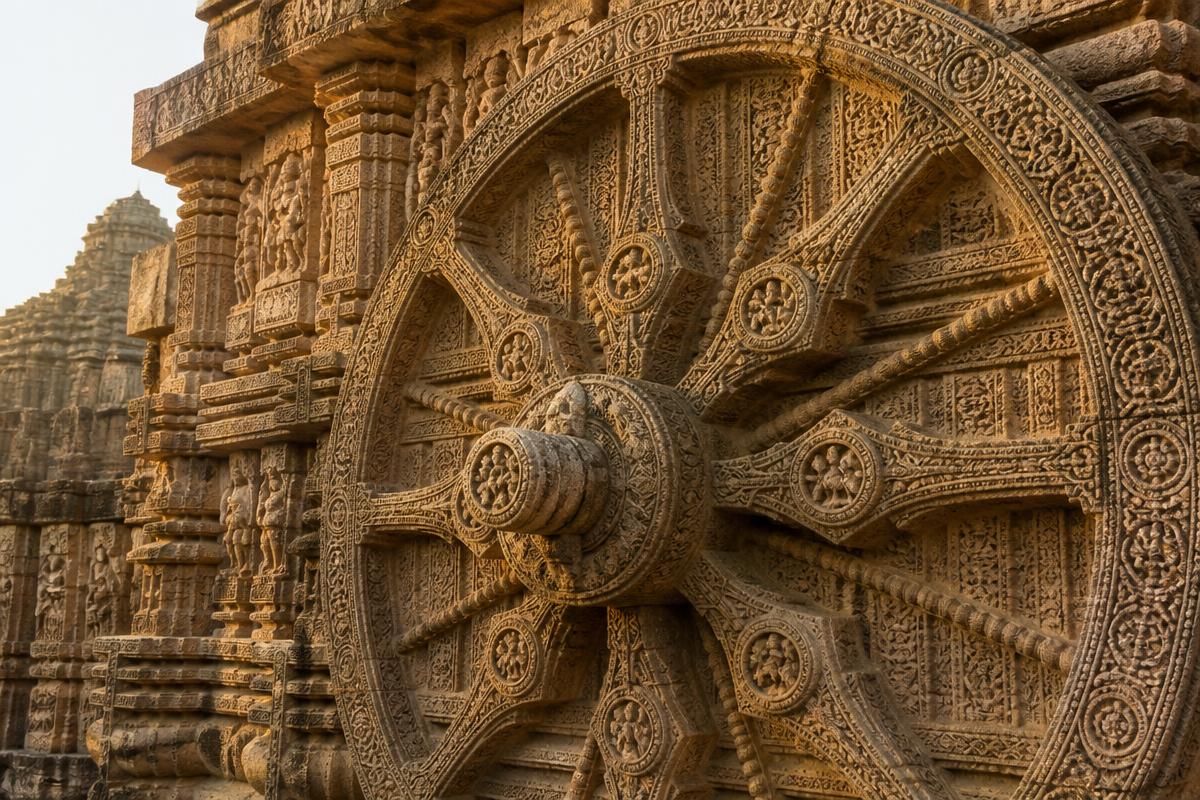
Spiritual Significance
The journey expresses a simple idea: the divine does not wait to be approached. It comes out, onto the road, into the crowd.
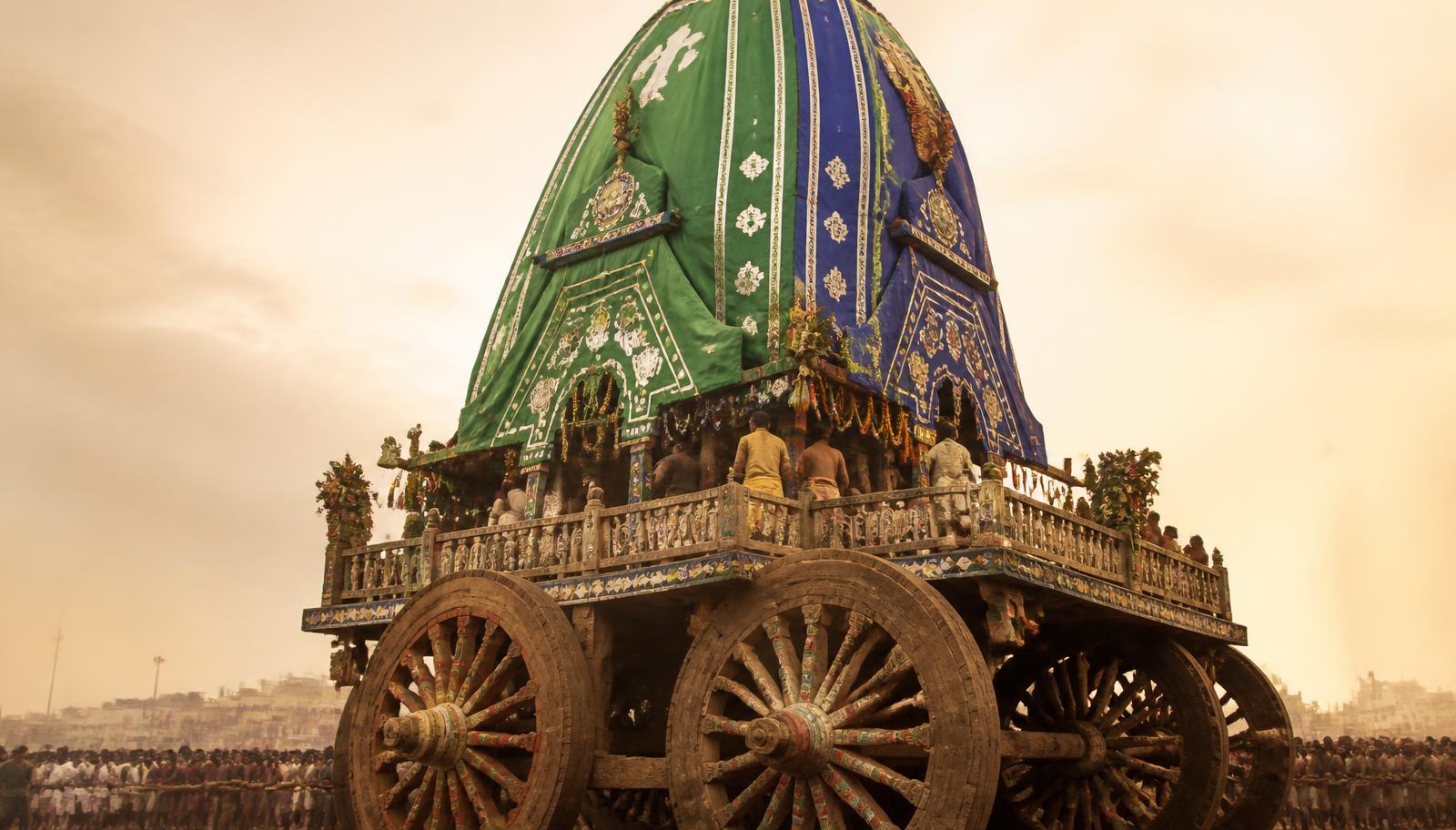
The Festival of Chariots
Each year, the deities of Sri Jagannath Temple leave the sanctum and travel by chariot to the Gundicha temple. For a few days, worship happens in the open, before everyone. It is this openness, more than the scale, that devotees speak of.
The journey expresses a simple idea: the divine does not wait to be approached. It comes out, onto the road, into the crowd.
Three chariots are constructed afresh each year by traditional craftsmen, using timber, rope, and cloth, following measurements preserved by custom.
The festival follows a fixed ritual sequence, with servitor communities performing their respective duties at appointed moments.
The chariots are drawn by devotees along the Bada Danda. The pulling itself is regarded as participation in the seva.
The Elder's Chariot
Taladhwaja is the chariot of Lord Balabhadra, the elder deity. Its name refers to the palm emblem borne upon its flag.
For families associated with Balabhadra seva, the days surrounding Taladhwaja's construction and journey are the most demanding of the year — and the most quietly cherished.
Specific measurements, colours, and ritual details are matters of tradition and are recorded here only as confirmed by authentic sources.
The Sequence
The festival unfolds in a fixed order, each stage carrying its own duties.
PREPARATION
PAHANDI BIJE
RATH YATRA
GUNDICHA YATRA
BAHUDA YATRA
SUNA BESHA
NILADRI BIJE
Personal Archive
Personal photographs, recollections, and notes from the festival season will be added to this section by the client.